
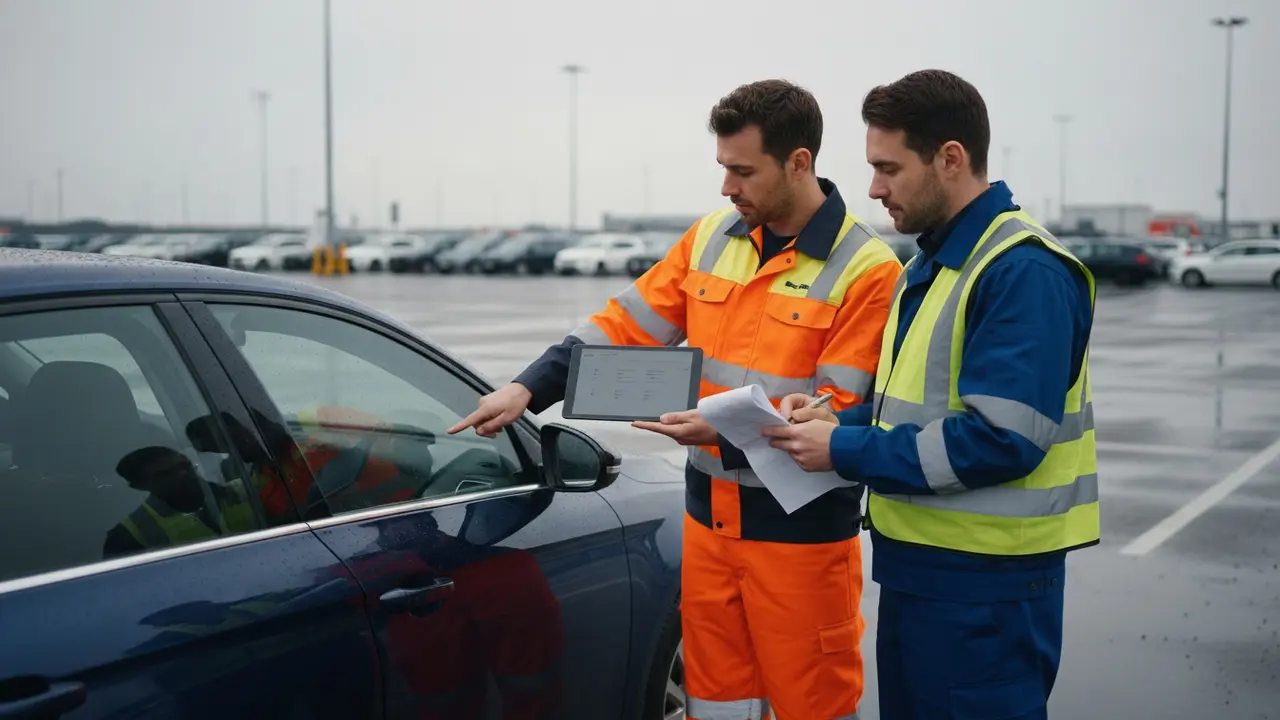

When standards are optional, disputes are effectively guaranteed because the same physical damage can be described, coded, and escalated in different ways across the handover chain. In finished vehicle logistics, inspection is not only about documenting condition; it is about producing evidence and exception data that multiple parties can interpret the same way under operational pressure. This article explains why varying damage codes and inspection standards create conflict, how standardization increases speed, what real alignment looks like across partners, and why disputes drop even when damage still happens.
The multiple languages problem in damage reporting
The multiple languages problem is that damage is rarely disputed at the level of “a scratch exists,” but frequently disputed at the level of identity: what the scratch is called, how severe it is, where it is located, and whether it crosses a threshold that triggers a claim, repair, or hold. In practice, finished vehicle logistics networks operate with a mix of OEM requirements, carrier processes, terminal routines, and local habits. Even when everyone believes they are “following a standard,” the standard being applied may differ in coding structure, defect taxonomy, severity rules, or panel mapping.
In our own observations, the breakdown is predictable: everyone agrees on standards in theory, then the handover happens in the rain, in the dark, with a queue building behind you, and standards become optional in practice. The pressure point is the handover itself, where time and throughput override careful classification. For more on why this happens operationally, see why standards fail in the field and the handover moment.
What we saw repeatedly is that coding is done later. Someone inspects quickly, captures minimal notes or photos, and then “translates” what they remember into a code after the fact. Another party receives the vehicle and uses a different language or taxonomy. Now the same damage has two identities, and disputes are born because reconciliation becomes interpretation rather than verification. This pattern aligns closely with what we describe as the cost of evidence debt: the longer you delay structured evidence and standardized coding, the more expensive the downstream alignment becomes.
Why standardization equals speed in finished vehicle logistics
Standardization equals speed because it reduces the amount of human translation required at every step. When damage types, locations, and severities are produced in a shared format, downstream teams can act immediately: exceptions can be routed, repair decisions can be pre-qualified, and claims packages can be assembled without re-coding. In contrast, when each partner uses a slightly different schema, every handover introduces a conversion step, and conversion steps create delays, errors, and argument.
Time pressure is the multiplier. A standard that requires extra effort at the gate, on the quay, or in a busy compound will be bypassed, not because people do not care, but because the operation is optimized for flow. This is why inspection quality collapses under time pressure is not a training problem alone; it is a system design problem. If compliance requires heroics, it will not scale across shifts, sites, and seasons.
From a process perspective, the speed gain comes from removing ambiguity. When a damage record is already expressed in the language the ecosystem recognizes, the next party does not need to reinterpret it. They can check consistency between photo evidence and the standardized output, rather than debate what category it should have been placed in.
What alignment looks like across OEMs, LSPs, carriers, and terminals
Alignment is not “everyone uses the same app” or “everyone has the same training deck.” Alignment is operational interoperability: the ability for one party’s inspection output to be ingested, understood, and acted on by another party without manual transformation. In finished vehicle logistics, that typically means agreement on a shared damage code set and shared conventions for how codes are applied at capture.
In practice, alignment looks like a consistent inspection record that includes:
- A standardized damage code that represents type and severity in a commonly accepted taxonomy.
- A standardized location model (panel/zone) so “where” is not subjective.
- Photo evidence that is captured at the moment of inspection and linked directly to the coded exception.
- Consistent thresholds for what becomes an exception versus what is informational.
The operational goal is not perfection; it is predictable interpretation. When partners align on a shared coding language, the discussion shifts from “your code is wrong” to “the evidence supports or does not support this coded exception.” That shift is what reduces disputes and accelerates resolution.
Why disputes drop even if damage still happens
Disputes drop even if damage still happens because standardized outputs reduce the surface area for disagreement. Damage can still occur in transport, at terminals, or during yard moves, but a claim escalation is less likely to turn into a prolonged argument when parties share a common defect identity and comparable evidence quality. The dispute is rarely about the existence of an event; it is about whether the event meets the coded definition that triggers liability and whether the timeline is defensible.
Our data repeatedly showed that disputes are created by re-encoding. When someone codes after the fact and someone else uses a different language, the same damage becomes two different records. Standardization at capture prevents that split identity. It also supports faster exception handling because workflows rely on consistent exception types to route tasks correctly. Claims Recovery relies on standardized outputs to sync into claims workflows without manual recoding, which is one reason why claims stay manual remains such a persistent reality in the sector.
This is also why the objective is not “standards should change.” The objective is that companies need systems that make standards possible to follow at speed, in real operating conditions, without adding friction to the handover.
Technology and automation context: how standardized coding at capture enables automation
AI and computer vision support standardization by producing consistent, repeatable outputs from inconsistent real-world conditions. The key is to generate standardized damage records at the point of capture, so that evidence and coding are created together rather than being reconciled later.
That is why we built automatic M-22 coding at capture. The moment a photo is taken, the output is already expressed in a standardized code language that the ecosystem recognizes. This removes the “translation layer” that typically appears between inspection and reporting, especially when the inspection happened under pressure and the coding was completed later.
Once the output is standardized, automation becomes feasible beyond reporting:
- Exception handling workflows can route cases based on consistent defect types and severities, rather than free-text descriptions.
- Operations teams can prioritize and allocate resources using comparable exception categories across sites and partners.
- Claims processes can ingest coded outputs without manual re-keying, reducing mismatch between evidence, codes, and claim forms.
For a deeper look at how standardized capture turns evidence into downstream action, see from photo to action. For broader context on our approach to AI digital vehicle inspections and the underlying capability of car damage detection, those references provide the technical foundation behind capture-time standardization.
Conclusion
Disputes in finished vehicle logistics are often the product of optional standards, not optional damage. When coding languages differ, when inspections are translated after the fact, and when evidence is not linked to standardized outputs at the moment of capture, the same damage acquires multiple identities and accountability becomes negotiable.
Standardization increases speed because it reduces interpretation work across handovers and enables workflow and claims automation that depends on consistent exception types. The practical requirement is not stronger agreement on standards in meetings; it is operational design that makes compliance possible in the rain, the dark, and the queue. For OEMs, carriers, LSPs, terminals, and technology owners, the path to fewer disputes is clearer: standardize the output, generate it at capture, and let the ecosystem operate on shared definitions rather than competing translations.
