


From Photo to Action: The Workflow Layer FVL Has Been Missing
Finished vehicle logistics moves from photo to action by treating every inspection photo as structured work: an exception that is assigned, tracked, and packaged into handover-ready outputs with a proof trail. This article explains why the modernization leap is not “more photos” or “better dashboards,” but a workflow layer that turns exceptions into tasks with ownership, deadlines, and auditability across yards, ports, compounds, carriers, and OEM handovers.
The old world: photo → email → argument
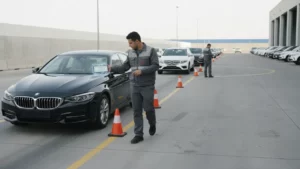
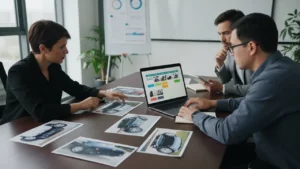
The legacy operating model in FVL is familiar: an inspector captures damage photos, then sends them “somewhere” to make the issue visible—an email thread, WhatsApp message, shared drive link, or a paper form scanned later. The problem is not that evidence does not exist; it is that evidence is fragmented, non-standard, and hard to translate into a single accountable next step. When information is scattered across inboxes and chat threads, teams spend time reconstructing context: which VIN, which location, which handover point, what severity, what should happen next, and who approved it.
This is where disputes breed. Different parties look at the same photo and disagree about timing, responsibility, or whether the damage is new. The operational cost is not only rework and follow-up—it is idle time. Vehicles wait while people search for the “right” chain, the “latest” attachment, or the person who can authorize action. Over time, this creates what many logistics organizations recognize as evidence that exists but is not usable at the moment it matters, driving downstream friction and delay. For a deeper framing of how scattered evidence becomes a compounding operational burden, see the cost of evidence debt.
The new world: photo → structured exception → assigned task
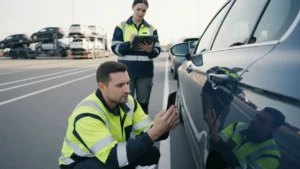
The modern model treats a photo as the start of execution rather than the end of documentation: the photo becomes a structured exception, and the exception becomes an assigned task. In our own observations, the industry has no shortage of photos; what it lacks is action. We repeatedly saw the same pattern: an inspector captures images, sends them through informal channels, and then the real work becomes chasing the correct person to respond. That is when vehicles sit, delays compound, and the promise of fast, damage-free delivery quietly breaks.
We built our workflow layer around a simple question: what if a photo was not an attachment—what if it was the trigger for a workflow? In practice, this means that as soon as an exception is detected, it becomes a task with an owner, priority, deadline, and a proof trail. Repairs, rework, carrier follow-up, and securement fixes are not “messages”; they are accountable work items. This is how you avoid vehicles sitting for 30+ days simply because the next step is unclear or unowned. Inspection establishes the shared truth, workflow establishes the next action, and the resulting package stays usable when claims and disputes inevitably arrive.
This structure also supports the “handover moment,” where accountability is won or lost. When exceptions are converted into tasks with timestamps, responsible parties, and attached evidence, the handover is no longer an argument about what was said in a thread; it becomes a verifiable record of what was observed, when it was observed, and what was done next. The concept is explored further in the handover moment—where accountability is won or lost.
Why workflows matter more than dashboards
Dashboards are useful for visibility, but they do not resolve exceptions. In FVL, the primary operational risk is not a lack of metrics; it is a lack of closed-loop execution. A dashboard can show that damage incidents exist, that certain lanes have higher exception rates, or that dwell time is rising. It cannot, by itself, ensure that a specific VIN gets a decision, a repair, a release, a carrier response, or a claim-ready evidence pack.
Workflows matter because they operationalize accountability. They answer the questions that dashboards cannot: who owns this exception, what is the required action, what is the deadline, what evidence is required, what approvals are needed, and what constitutes “done.” When this is enforced at the exception level, organizations shift from reporting performance after the fact to preventing avoidable dwell and rework in the moment. This “inspection-to-resolution” operating model is consistent with the idea that closed-loop inspections create value (not the inspection itself).
3 workflow patterns that work (repair/rework, carrier follow-up, customer reporting)
Three patterns repeatedly prove practical in daily FVL operations because they map to the highest-friction handoffs: the repair decision, the carrier responsibility loop, and the customer-facing reporting package.
Repair and rework workflow
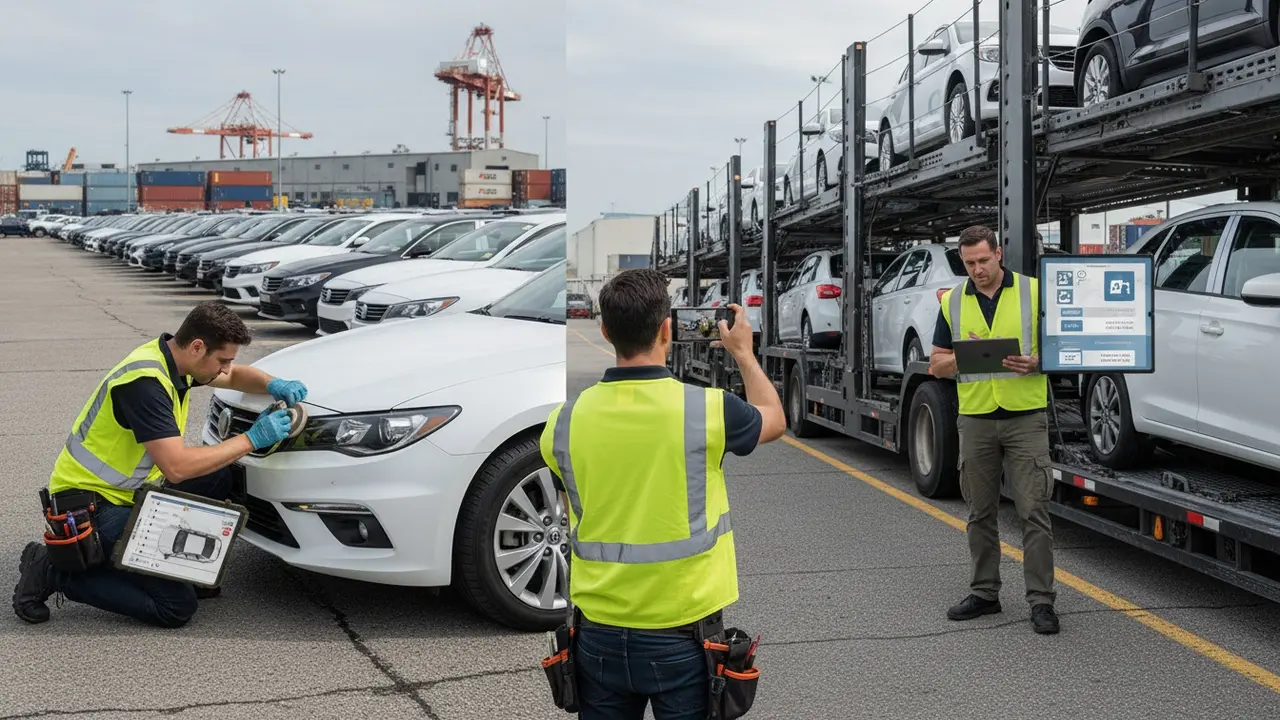
Repairable damage, cosmetic rework, and securement-related fixes are time-sensitive. A workable pattern is to generate a repair task as soon as the exception is logged, route it to the correct team (in-yard repair, external vendor, or workshop), and require closure artifacts before the vehicle progresses. The proof trail matters: before/after images, timestamps, and completion confirmation reduce re-opened work and “did it actually get fixed?” debates. When securement issues are treated as routable work rather than an informal note, they can also become trackable operational signals; see securement exceptions as a first-class KPI.
Carrier follow-up workflow
When a carrier is implicated, speed depends on turning the exception into a structured request rather than a loose message. The workflow should package the minimum needed for a carrier response: VIN, location, handover point, damage classification, photos, and a clear ask (acknowledge, dispute with evidence, authorize repair, or escalate). The operational advantage is that follow-up becomes measurable and enforceable: deadlines can be set, reminders become systematic, and escalations are triggered by rules instead of memory. This reduces the common failure mode we observed: evidence is sent, but nobody can confirm who is supposed to act on it next.
Customer reporting workflow
Customer reporting is often treated as a documentation task at the end of the chain, but it works better as a standardized output of the exception workflow. When exception resolution produces a handover-ready package—photos, classification, timestamps, repair status, and responsibility context—customer communication becomes consistent and defensible. It also prepares the organization for claims without a second round of evidence gathering. Many organizations find that claims stay manual because the underlying inputs are not structured and comparable across parties; this connects directly to why claims stay manual. Where claims are unavoidable, reducing time lost between incident and claim-ready documentation helps avoid the operational pattern of slow resolution creating slow recovery, described in the claims cycle-time trap.
Technology and automation context
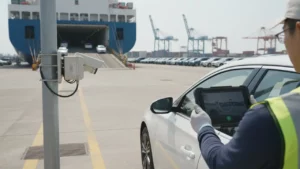
AI-based inspection and computer vision matter here because they can create consistent, scalable inputs for workflows, but automation only delivers operational value when it feeds execution. Image capture and damage detection standardize what is observed across inspectors and sites; structured exception objects standardize how the observation moves through the organization. When the exception is treated as data—not a photo in an inbox—the system can enforce required fields, apply routing rules, set deadlines, and maintain an audit trail without relying on individual discipline.
This is also where consistency becomes more important than novelty. The goal is not an “AI demo”; it is repeatable decision-making under real operational constraints: high throughput, multiple stakeholders, and frequent handovers. When tasks, timestamps, and evidence are unified, teams do not need to re-interpret the same incident across tools. The workflow layer becomes the control plane that prevents exceptions from becoming silent dwell.
Conclusion
The modernization leap in FVL is moving from photos traveling through emails and chats to structured exceptions that become assigned tasks with proof trails and handover-ready outputs. The old model produces evidence but not action, which is why vehicles sit and delays compound. The workflow model makes exceptions executable: it defines ownership, deadlines, closure criteria, and auditability, and it supports practical patterns for repair/rework, carrier follow-up, and customer reporting.
For logistics operators, OEMs, ports, and carriers, the practical takeaway is simple: inspection creates visibility, but workflows create outcomes. When a photo reliably triggers the next step—and records that step in a traceable way—exception handling becomes faster, less disputable, and more scalable across the handovers where FVL performance is actually won or lost.