
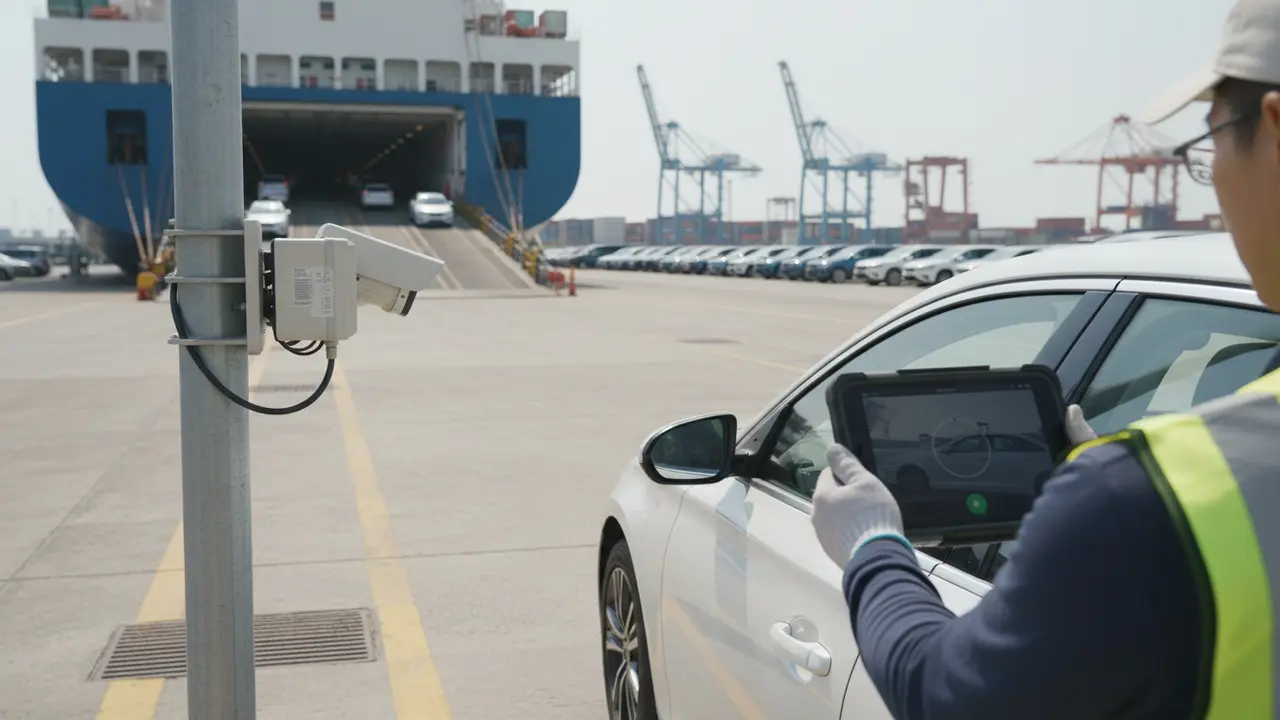

Hybrid inspection is the future because one capture method cannot reliably fit every finished vehicle logistics node, and we learned this by supporting operations that tried to force a single approach across very different constraints. This article explains why a pragmatic mix of mobile vehicle inspection, fixed drive-through gates, and integrations with existing camera infrastructure (such as CCTV) is the most operationally realistic way to achieve consistent evidence, repeatable quality, and scalable throughput without over-engineering early.
The myth of one perfect system
The idea of deploying one “perfect” inspection system across yards, ports, rail ramps, compounds, and carriers is attractive because it promises standardization through uniform hardware. In practice, it often creates uneven coverage and inconsistent evidence because the capture method is mismatched to how vehicles actually move and where accountability is decided. When inspection evidence is incomplete at key events, operational teams accumulate “evidence debt”: missing or low-quality images that later turn into disputes, rework, and time-consuming exception handling. That cost is rarely driven by AI capability; it is driven by capture practicality at the moments that matter.
This is why hybrid is not a technology preference; it is a control strategy for custody and liability. In finished vehicle logistics, the inspection point is frequently non-negotiable: you need defensible condition evidence exactly when responsibility shifts. That requirement shapes which hardware can work at each node, and it is the main reason a single-method rollout tends to break down.
For a deeper view on what inconsistent evidence creates downstream, see our piece on evidence debt.
Node constraints that decide what is feasible
Different nodes fail for different reasons, and those reasons are usually physical and operational rather than digital. The same capture method can be excellent in one location and unreliable in the next because the limiting factors change.
The constraints that most often dictate capture choice are:
- Speed and dwell time: whether the vehicle is stationary long enough to capture complete coverage without cutting corners.
- Lighting and environment: whether glare, shadow, night operations, or indoor/outdoor transitions are predictable enough for consistent imaging.
- Volume and peak variability: whether throughput is steady, bursty, or seasonal, and whether staffing can keep up at peak.
- Space and traffic flow: whether you can dedicate lanes for drive-through capture without creating bottlenecks or safety risks.
- Site control: whether the operator owns the ground and can install permanent fixtures, or operates on leased/shared infrastructure where portability matters.
Under time pressure, inspection quality tends to collapse in predictable ways: fewer angles captured, rushed walkarounds, and inconsistent severity labeling. Hybrid designs reduce that fragility by matching the capture method to the node’s real throughput and dwell profile rather than forcing a uniform workflow. We expand on the dynamics of throughput pressure in inspection quality collapses under time pressure.
Where mobile, gates, and CCTV integrations actually fit
We support three ways of capturing images for damage analysis: mobile capture, drive-through gates, and integrations with existing hardware like CCTV. Over time, we found that no one approach can go alone. The closest to “standalone” is mobile capture, but even then, high-throughput nodes often benefit from a gate layer.
The core operational reality is timing: inspections most often need to happen at custody change to meet M22 expectations, meaning the vehicle is typically parked in a yard handover, secured on railcars, on a truck, or positioned for RoRo loading. That is a stationary moment with clear accountability, and it is why we are mobile-first: phones and handheld devices let inspectors capture complete evidence exactly where handovers occur, without depending on lane availability or permanent infrastructure. For more on why custody change is decisive, see the handover moment (custody change) and our dedicated page on mobile vehicle inspections.
Drive-through gates fit when traffic patterns are structured and throughput is high enough to justify dedicated capture lanes. A common example is a controlled entry into a yard or compound where most vehicles pass the same point. Gates can standardize angles and reduce per-unit labor, but our operational learning was that gates often need to be portable. Many operators do not own the grounds they operate on, and permanent installations reduce flexibility when flows change, contracts shift, or lanes must be reconfigured.
CCTV and existing camera integrations fit where hardware is already present and the goal is to extend inspection coverage without new physical deployments. This is typically valuable for “coverage gaps” between formal inspection events, or for adding visual context at checkpoints that already have surveillance-grade equipment. The limitation is that surveillance placement is rarely designed for inspection completeness, so the integration strategy must be explicit about what evidence can be reliably extracted and what still requires a dedicated capture step.
If readers want a broader overview of capture options and why each one behaves differently in practice, our article on vehicle inspection technologies provides additional context.
Blueprint: start simple, then scale where volume justifies
A rollout that starts with fixed hardware everywhere often fails because it assumes the node is stable, lanes are controllable, and site permissions are straightforward. In reality, inspection programs succeed when they start with the method that works at the largest number of nodes under the widest set of constraints, then add infrastructure only where the throughput and flow stability justify it.
A pragmatic blueprint looks like this:
- Start with mobile capture at custody-change events, because this is where accountability is decided and vehicles are typically stationary.
- Standardize data and inspection outputs early, so evidence is comparable across sites even if capture methods differ.
- Measure where labor time becomes the bottleneck, using volume and peak flow patterns to identify true high-throughput choke points.
- Deploy drive-through gates at those choke points where vehicles reliably pass a fixed point and lane dedication is operationally safe.
- Integrate CCTV or existing camera infrastructure to extend coverage where new hardware is difficult, while keeping expectations realistic about image completeness.
This “mobile first, then gates where needed” approach is also the most resilient when operator control of the site is limited. It keeps the program moving while the organization learns which nodes are stable enough to warrant fixed deployments. For guidance on what commonly derails AI inspection rollouts, see common failures when adopting AI inspections. For scaling with consistent outputs across nodes, we also describe how inspection software for consistent data and reporting supports standardization even in mixed-hardware environments.
Technology and automation context: why hybrid improves consistency, not just coverage
Hybrid capture only works if the back-end interprets different image sources in a consistent way. From an AI and computer vision perspective, mobile images, gate images, and CCTV frames differ in perspective, distance, motion blur risk, and lighting variability. The operational goal is not to make every image look identical; it is to ensure that damage detection, classification, and evidence packaging remain comparable across methods so that downstream exception handling and claims workflows are based on repeatable outputs.
This is where automation supports real operational control:
- Consistency: the same damage taxonomy and severity logic can be applied even when capture devices differ.
- Scalability: additional nodes can be added without creating separate inspection “systems” that fragment evidence and reporting.
- Traceability: evidence is tied to specific custody events, enabling clearer responsibility boundaries when exceptions arise.
In our experience, the strongest benefit of hybrid is that it lets operations align capture with reality while still maintaining a single inspection standard. That is only feasible if the platform can ingest mobile, gate, and integrated camera streams without splitting workflows or forcing teams into parallel tools.
Conclusion
Hybrid inspection is the future because finished vehicle logistics is not a single environment; it is a network of nodes with different throughput, space, lighting, and site-control constraints. We learned that mobile capture is the most universally deployable method, largely because inspections need to occur at custody change in line with M22 expectations, when vehicles are stationary and accountability is clear. We also learned that gates are valuable at stable, high-throughput points, but deployments often need portability due to property and infrastructure constraints, and CCTV integrations can extend coverage when hardware already exists.
The pragmatic path is to start mobile-first, standardize evidence and outputs, then scale fixed capture where volume and flow justify it. When all three capture modes feed one unified inspection system, automotive logistics stakeholders avoid fragmented data, reduce disputes created by missing evidence, and gain a repeatable inspection standard across the network.
